

Your Petrol Is Now 20% Ethanol. What Exactly Changed?
India has quietly rewritten what goes into a litre of petrol.
In the Ethanol Supply Year 2025-26, average blending reached 20%, compared with less than 1.5% in 2013-14. In simple terms, E20 petrol contains roughly 20% ethanol + 80% petrol.
The Shift in the Numbers
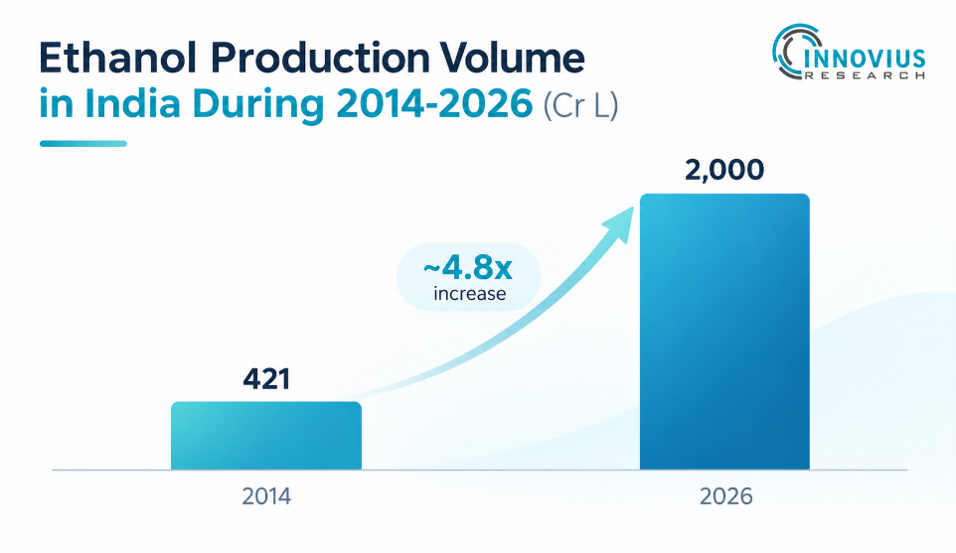
The shift is much bigger than a change at the pump. Analysts project that ethanol procurement will exceed 1,200 crore litres in 2025-26. India’s production capacity expanded from 421 crore litres in 2014 to about 2,000 crore litres in 2026. India is now the world’s third-largest ethanol producer.
Why Push E20?
India imports about 88.5% of its crude oil. Replacing part of petrol with domestically produced ethanol reduces exposure to oil-price shocks and creates a new market for agricultural output.
By July 2026, the government reported cumulative foreign-exchange savings of more than ₹1.97 lakh crore, crude substitution of nearly 316 lakh tonnes, and farmer payments exceeding ₹1.66 lakh crore through the programme.
Why is India Putting Ethanol in Petrol?
The biggest reason is energy security.
Every litre of domestically produced ethanol can replace part of the petroleum India would otherwise need to import. It also creates a sizeable new market for sugarcane, maize, surplus rice and other agricultural feed-stocks.
According to the IEA, the ethanol ecosystem has expanded and consumption grew from under 2 billion litres annually in 2018 to more than 11 billion litres by 2025.
But There is a Catch
Ethanol is increasingly coming from food-linked grains.
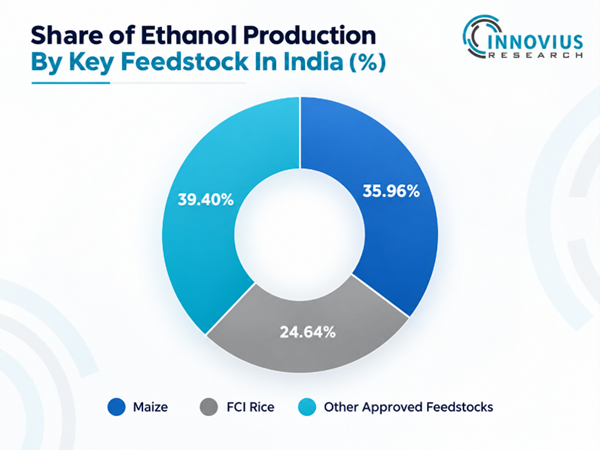
In 2025-26, maize represented 35.96% of ethanol production and FCI rice another 24.64%. That makes feedstock availability, food and feed demand, land use and water consumption increasingly important parts of the ethanol debate.
What Does E20 Change?
| Area | What E20 Means |
|---|---|
| Oil Imports | Part of petrol demand shifts to domestically produced ethanol |
| Farm Economy | New demand for maize, sugarcane, rice and other approved feedstocks |
| Distilleries | Higher capacity utilisation and investment opportunities |
| Automakers | Engines, fuel systems and materials need E20 compatibility |
| Motorists | Higher octane, but potentially lower mileage in vehicles not optimized for E20 |
NITI Aayog estimated a 1-2% fuel-efficiency reduction for four-wheelers designed for E10 and calibrated for E20, with larger penalties possible in older configurations.
What Comes After E20?
The next chapter could include flex-fuel vehicles, second-generation ethanol from crop residue and ethanol-based sustainable aviation fuel.
E20 is therefore more than petrol reform. It is shifting part of India’s transport-fuel value chain from imported crude to domestic agriculture, biofuel production, and automotive engineering.
Data Sources: PIB, Government of India, MoPNG / PIB, Government, f India, NITI Aayog, ICRIER, International Energy Agency, ScienceDirect, and others.
Frequently Asked Questions
➤ What is E20 petrol and how is it different from regular petrol?
E20 petrol contains roughly 20% ethanol and 80% petrol, meaning a larger portion of the fuel is domestically produced ethanol compared with traditional petrol.
➤ Why is India pushing for E20 and what are the expected benefits?
India pushes E20 to enhance energy security by reducing crude oil imports and creating a new market for agricultural output, with cumulative foreign-exchange savings and farmer payments reported through the programme.
➤ What are the potential drawbacks or challenges of adopting E20?
Ethanol is increasingly sourced from food-linked grains, and a 1-2% fuel-efficiency reduction is estimated for some vehicles designed for E10 and calibrated for E20, with potentially larger penalties for older configurations.
➤ How does E20 affect different sectors like farming, automakers, and motorists?
For farming, there is new demand for maize, sugarcane, and other feedstocks; for automakers, engines and fuel systems need E20 compatibility; motorists may experience higher octane but potentially lower mileage in vehicles not optimized for E20.
➤ What could come after E20 and what does this mean for India’s fuel future?
The next chapter could include flex-fuel vehicles, second-generation ethanol from crop residue, and ethanol-based sustainable aviation fuel, signaling a shift from imported crude to domestic agriculture and biofuel production in India’s transport-fuel value chain.
Other Market Insights