


Jio’s Record-Breaking IPO: Is Mukesh Ambani Creating India’s Next Stock Market Giant?
From disrupting telecom to dominating Dalal Street, Jio’s biggest test may still lie ahead.
India’s biggest IPO is more than a market headline. It is a test of how much investors will pay for the business that changed India’s internet habits.
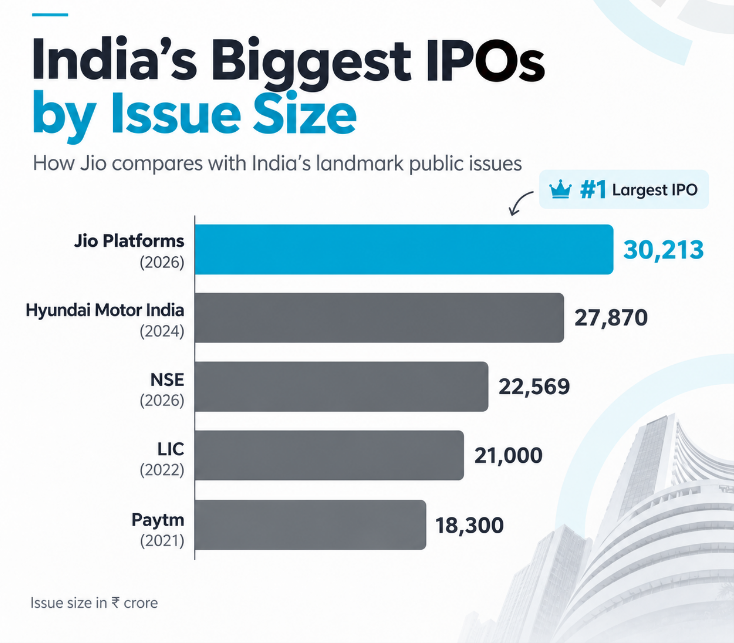
Mukesh Ambani’s Jio Platforms is seeking up to ₹30,213 crore at ₹1,065-₹1,119 per share, implying a valuation near ₹10.3 lakh crore. Investor excitement is unmistakable: bidding exceeded 13 times the shares available on the final day.
A Giant Built on Real Numbers
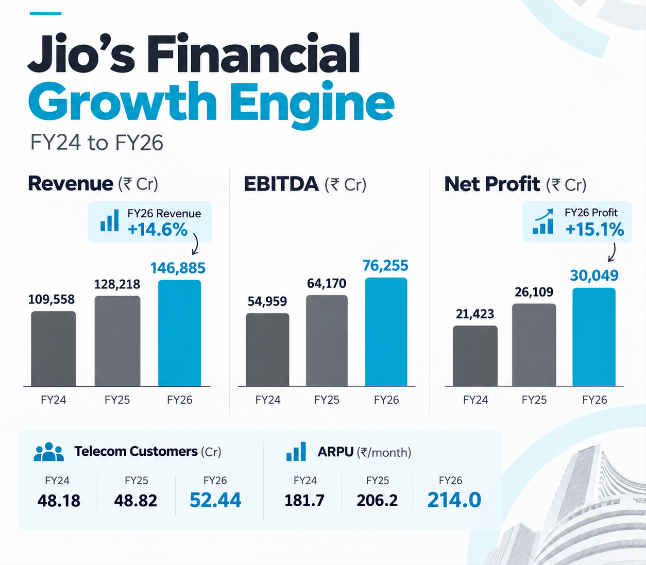
Jio had 53.92 crore telecom customers by August 2026 and carried roughly 60% of India’s wireless data traffic in FY26. Its FY26 revenue reached ₹1.47 lakh crore, while annual profit climbed 15% to ₹30,049 crore.
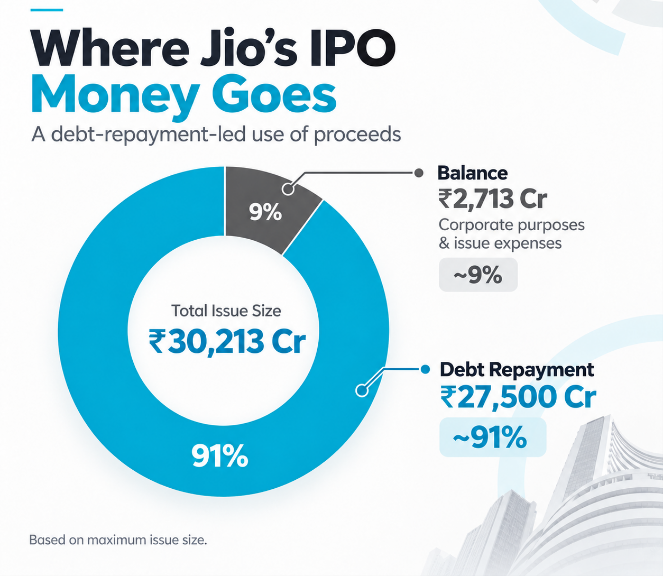
Yet the real twist is where the money goes. Up to ₹27,500 crore is earmarked for repaying borrowings at Reliance Jio Infocomm. A stronger balance sheet could support future growth, but the IPO is not a direct promise of cheaper mobile plans.
Who Wins, and Who Should Watch Out?
Customers: JioFiber, AirFiber, cloud and AI services may expand digital access. Higher-priced bundles and future tariff increases could raise household bills.
Merchants: Better connectivity, managed Wi-Fi and cloud tools could support digital operations for kirana stores and small businesses.
Investors: A direct way to own Jio’s growth story, with a reserved bidding category for eligible Reliance shareholders.
Competitors: Greater pressure across telecom and enterprise technology.
The ₹10.3 Lakh Crore Question
Jio already has scale and profits. But telecom still generates substantially all its revenue. Monetising AI, cloud and enterprise services at scale remains a challenge, alongside regulation, infrastructure spending and ambitious valuation expectations.
Jio may become India’s next stock-market giant. Whether it becomes a great investment is a different question.
Data Sources: SEBI, Jio Platforms, Reliance Industries, Reuters, Kotak Neo, NSE
Frequently Asked Questions (FAQs)
1. What is the difference between IPO size and company valuation?
IPO size represents the total value of shares offered to investors during the public issue. Company valuation reflects the estimated worth of the entire business. A company can raise a relatively small amount through an IPO while commanding a significantly larger market valuation.
2. Does an oversubscribed IPO guarantee listing-day profits?
No. Oversubscription indicates that investor demand exceeds the shares available, but it does not guarantee listing gains. Market sentiment, valuation, institutional participation and broader stock market conditions influence how a stock performs after listing. Even heavily oversubscribed IPOs can list below their issue price.
3. Why is ARPU important when evaluating telecom companies?
Average Revenue Per User (ARPU) measures how much revenue a telecom operator generates per customer over a given period, typically monthly. Rising ARPU can indicate stronger monetisation through premium plans, increased data consumption or tariff adjustments. However, it should be evaluated alongside subscriber retention, profitability and network investment.
4. Why do investors examine free cash flow alongside net profit?
Telecom companies require substantial investment in spectrum, network infrastructure and technology upgrades. Net profit reflects accounting earnings, while free cash flow helps indicate how much cash remains after operating expenses and capital expenditure. Strong profits do not necessarily mean a company has abundant cash available for debt reduction, dividends or expansion.
Other Market Insights