

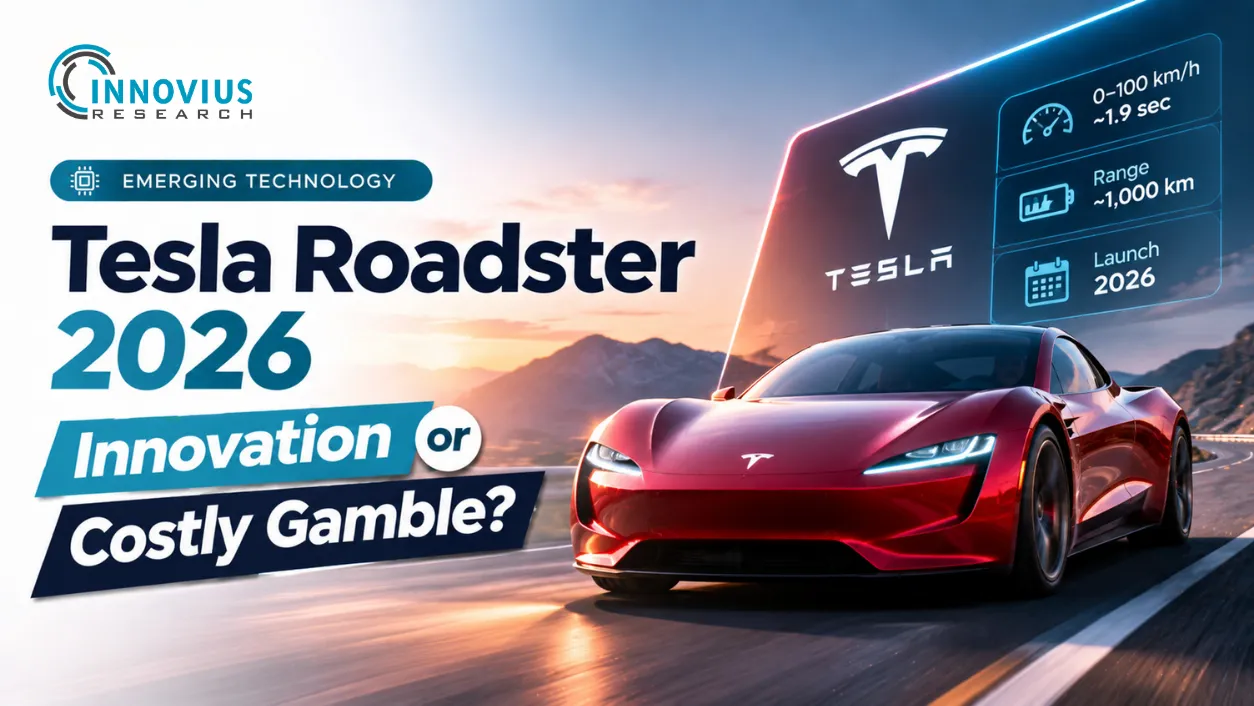
Tesla Roadster 2026: Innovation or Costly Gamble?
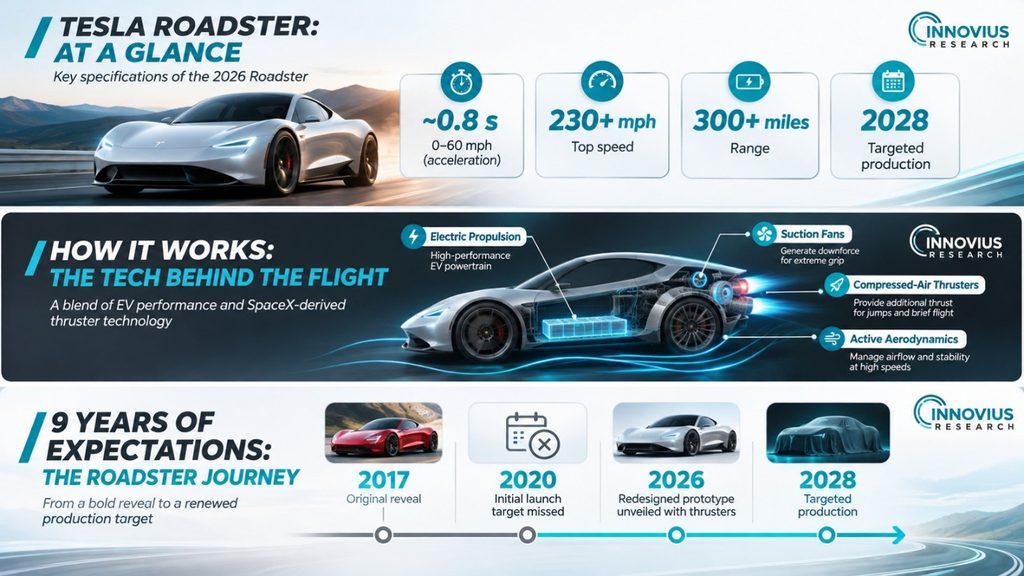
What happens when a supercar borrows technology from spacecraft? On 15 October 2026, Tesla unveiled a redesigned Roadster that used suction fans and SpaceX-developed compressed-air thrusters to drive upside down, jump, and turn midair. The demonstration happened. Production remains a promise.
The Numbers That Demand Attention
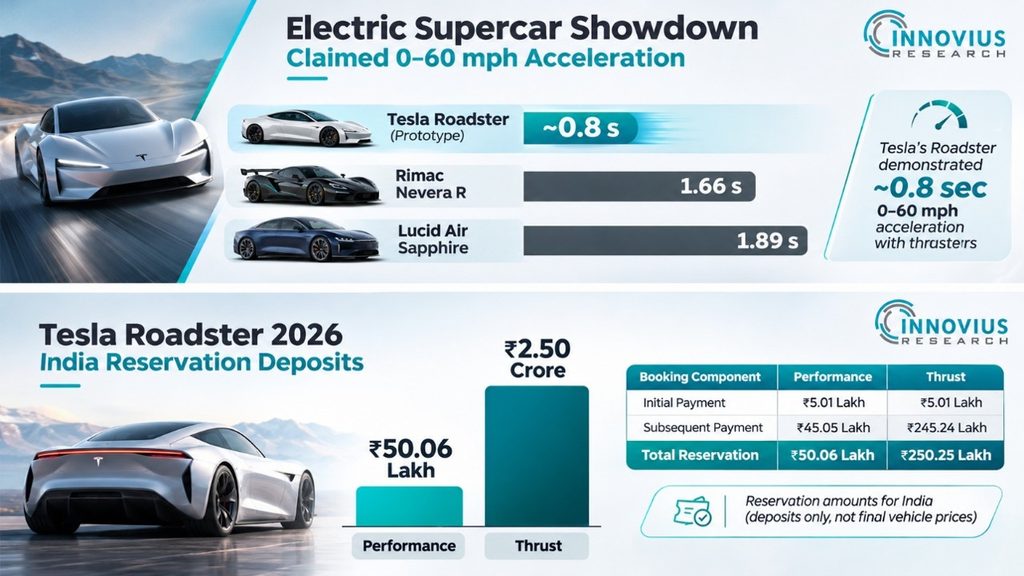
Tesla reported a thruster-assisted 0-60 mph run of approximately 0.8 seconds, alongside claims of 230+ mph top speed and 300+ miles of range. But context matters. In 2017, Tesla promised 620 miles of range, four seats and a 2020 launch. The revised production target is now 2028, with final pricing still undisclosed.
Who Stands to Benefit?
The Roadster could reshape expectations across the premium automotive industry.
- Luxary automakers: Greater pressure to demonstrate next-generation performance.
- Technology suppliers: Potential opportunities in lightweight materials, active aerodynamics and advanced propulsion.
- Insurers and service providers: New challenges surrounding safety, maintenance and liability.
Even Ferrari’s CEO praised the unveiling, rating its technology and presentation 10/10.
What Does This Mean for Buyers?
In India, reservations reportedly require ₹50.06 lakh for Performance or ₹2.50 crore for Thrust.
These are deposits, not vehicle prices. Delivery dates, right-hand-drive availability and regulatory approvals for thruster functionality remain uncertain.
Innovation or Expensive Spectacle?
The Roadster is unlikely to become Tesla’s next mass-market bestseller. Its larger purpose could be strengthening Tesla’s position as an engineering innovator while competitors push electric performance further.
The verdict: A breathtaking demonstration and powerful branding exercise, but commercial success will depend on safety, affordability, regulation and actual deliveries.
The future may be airborne. For now, Tesla still needs to deliver it.
For deeper automotive and emerging-technology insights, connect with Innovius Research.
Data Sources: Tesla, Reuters, Car and Driver, TechCrunch, Mint, Autocar India, Rimac, Lucid Motors
Frequently Asked Questions (FAQs)
- What is the difference between an electric supercar and a conventional electric vehicle?
Electric supercars prioritize extreme acceleration, advanced aerodynamics, lightweight materials, and high-performance engineering. Conventional EVs focus more on affordability, driving range, passenger comfort, and everyday practicality. - Can rocket thrusters make electric vehicles more energy-efficient?
Not necessarily. Compressed-air thrusters can provide short bursts of additional force, but they require energy to compress and store air. Their primary advantage is specialized performance rather than improved efficiency or driving range. - Why is battery thermal management important in high-performance electric cars?
Extreme acceleration generates significant heat in batteries, motors, and power electronics. Advanced cooling systems help maintain consistent performance, protect battery health, and reduce the risk of overheating during repeated high-speed driving. - Could flying-car technology become commercially viable in the future?
Potentially, but widespread adoption faces significant challenges, including aviation certification, airspace regulation, safety, infrastructure, noise, and insurance. Unlike brief airborne vehicle maneuvers, practical flying cars must demonstrate controlled, sustained flight and reliable operation.