


Gold at Nearly ₹1.5 Lakh: Should Indians Still Buy Jewellery This Festive Season?
India’s festive gold rush has a new question: when 10 grams cost almost as much as a premium smartphone, is jewellery still worth it?
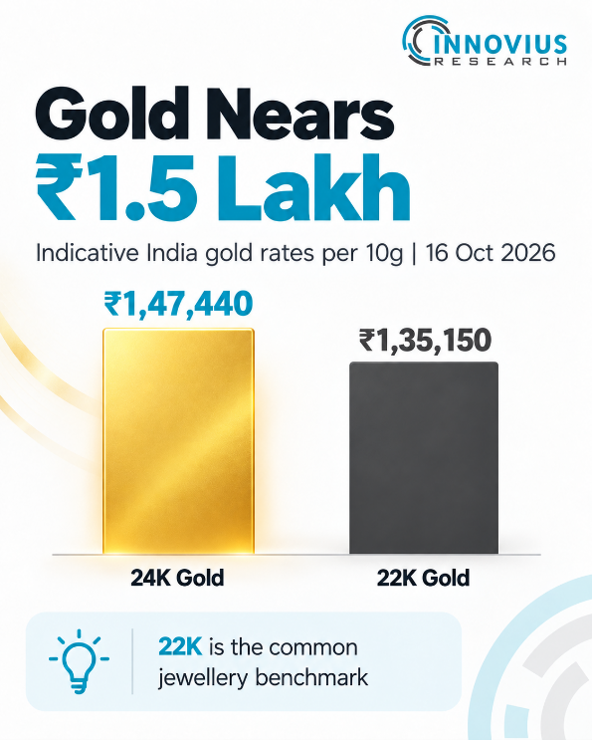
On 16 October 2026, indicative 24K gold stood at ₹1,47,440 per 10g; 22K, commonly used for jewellery, was ₹1,35,150. That is before making charges and GST.
More Spending, Less Gold
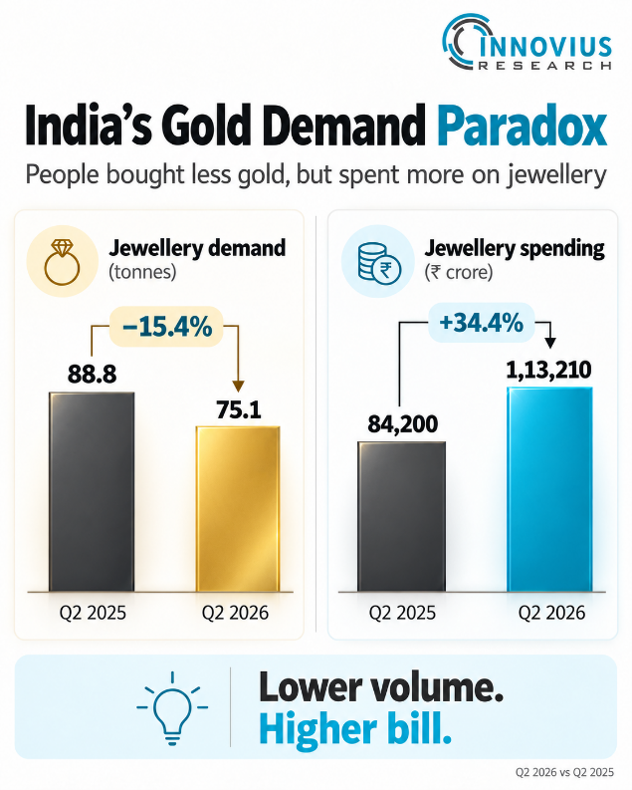
According to the World Gold Council, Indian Jewellery demand fell 15.4% by volume in Q2 2026, yet spending rose 34.4%. Rather than abandoning gold, households are choosing lighter pieces, fixed budgets and old-gold exchanges. At some retailers, exchanges accounted for up to 70% of sales.
Who Wins, Who Feels the Pinch?
High prices squeeze wedding budgets and make design premiums harder to justify. Households holding old gold can benefit from higher exchange values, although deductions still matter.
Meanwhile, organized jewellers are pushing lightweight, lower-carat and diamond-studded collections. Traditional shops dependent on heavy 22K jewellery face pressure. Retailers expect diamond jewellery sales to grow 15-20% this festive season, but this remains a projection.
Should You Buy Now?
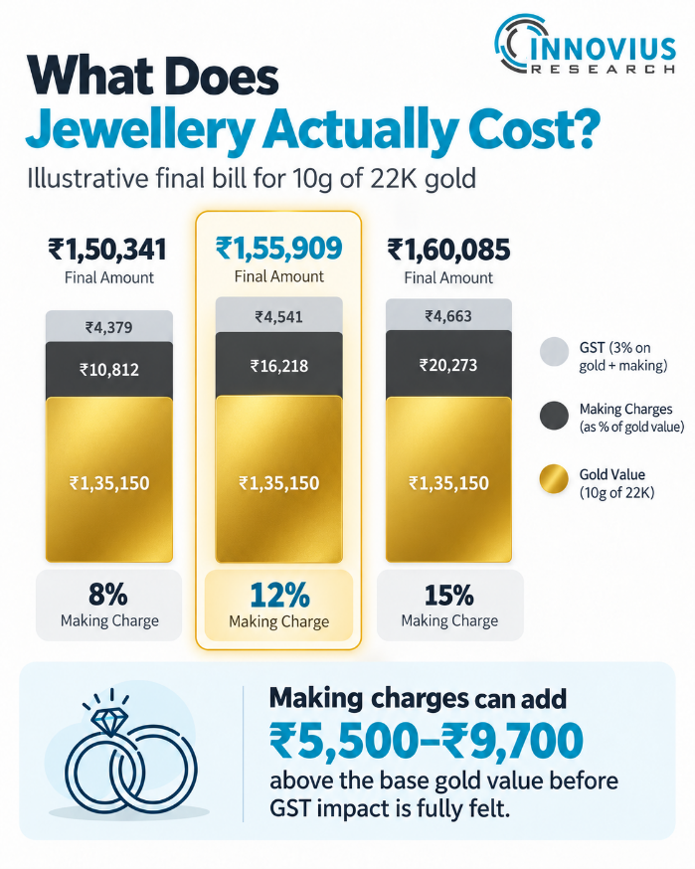
For weddings or meaningful gifts, buying within budget can make sense. Compare making charges, check BIS hallmarking and HUID, and demand an itemized bill. A 10g 22K piece priced at ₹1,35,150 becomes approximately ₹1.56 lakh with an illustrative 12% making charge and 3% GST.
Buying solely for returns? Coins or gold ETFs avoid some jewellery design costs, but come with their own fees, premiums and risks.
Gold’s next move will depend on global interest rates, geopolitics, the rupee and import policy. A guaranteed post-Diwali discount does not exist.
The Verdict
Gold remains culturally valuable. In 2026, the smartest festive purchase may be less gold, bought more thoughtfully.
For deeper insights, emerging trends and data-driven market intelligence, connect with Innovius Research to make more informed decisions.
Data Sources: World Gold Council, The Indian Express, The Economic Times, Central Board of Indirect Taxes and Customs, Bureau of Indian Standards
Frequently Asked Questions (FAQs)
➤ What is the difference between 24K, 22K and 18K gold?
Gold karat measures purity. 24K gold is approximately 99.9% pure, while 22K contains 91.6% gold and 18K contains 75%. Although 24K is more valuable per gram, its softness makes it less suitable for everyday jewellery. Lower-karat gold is generally more durable and is often preferred for intricate designs and gemstone settings.
➤ Why do gold prices differ across Indian cities?
Gold prices can vary between cities due to transportation costs, local demand, dealer premiums and supply conditions. International gold prices, the rupee-dollar exchange rate and import duties influence the underlying price nationwide. Individual jewellers may also apply different margins, making charges and discounts.
➤ Does BIS-hallmarked jewellery guarantee a higher resale value?
BIS hallmarking certifies the purity of the gold, helping buyers verify its authenticity. However, hallmarking does not guarantee a particular resale price. Jewellers may apply deductions for melting, refining or exchange, while original making charges and GST are generally not recovered.
➤ What is the difference between gross weight and net gold weight in jewellery?
Gross weight includes the entire jewellery piece, including gemstones, enamel and other non-gold materials. Net gold weight represents only the gold content by weight. This distinction is especially important for stone-studded jewellery because customers should understand how gold weight, gemstone value and making charges are calculated separately.
Consumer Tip: Always request an itemised invoice showing gold purity, net weight, stone weight, making charges and applicable taxes before purchasing jewellery.
Other Market Insights