

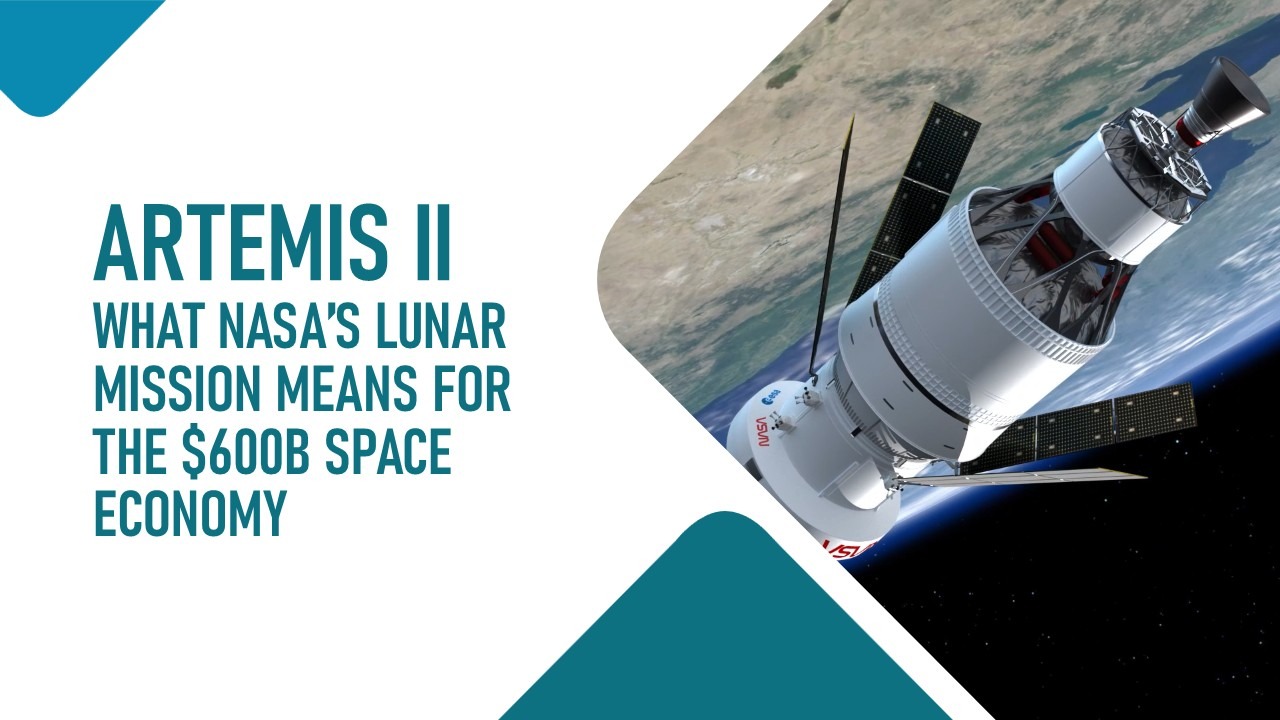
Artemis II: What NASA’s Lunar Mission Means for the $600B Space Economy
Artemis II is no longer just a future promise. NASA’s first crewed Artemis mission launched on April 1, 2026, sent four astronauts around the Moon on a 10-day lunar flyby, and safely returned on April 10, 2026.
It marks the first crewed lunar mission in over 50 years, and more importantly, the first real test of modern deep-space infrastructure with humans onboard.
What is Artemis II?
Artemis II is the first crewed mission under NASA’s Artemis program and a critical systems-validation flight.
➤ No lunar landing
➤ Free-return trajectory around the Moon
➤ Full testing of life support, navigation, communications, and re-entry
This mission is less about exploration and more about proving deep-space transport reliability at scale.
Key Players

NASA – Leading the Artemis program and long-term Moon-to-Mars strategy

Lockheed Martin – Built Orion, the crew spacecraft for deep-space missions

Boeing – Prime contractor for the Space Launch System (SLS) rocket
Why It Matters Commercially
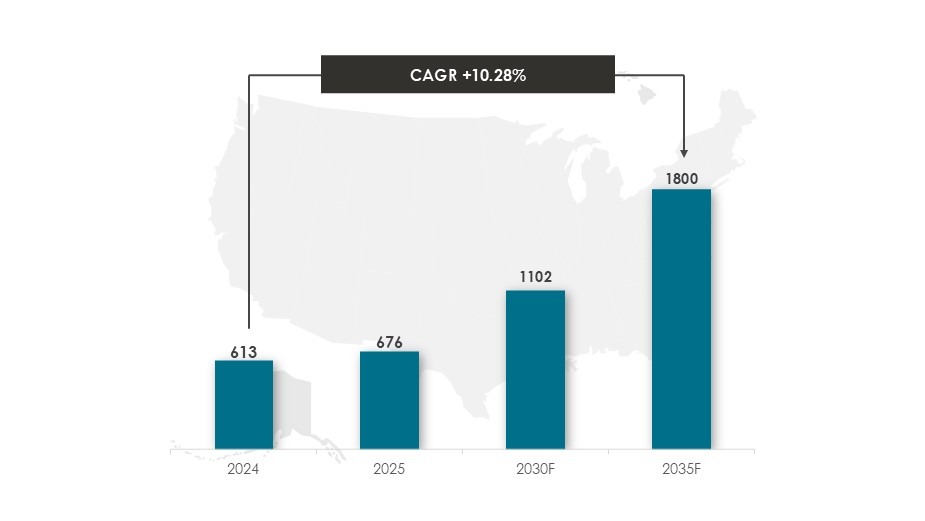
The global space economy reached $613 billion in 2024, according to Space Foundation, and projects it could grow to $1.8 trillion by 2035.
Artemis II matters because it turns long-range lunar ambition into demonstrated capability. That lowers perceived technical risk for investors, suppliers, insurers, and commercial partners looking at cislunar infrastructure, lunar cargo, communications, robotics, and training.
Market Impact
Artemis II strengthens three core opportunity areas:
➤ Launch Services
→ Validates demand for heavy-lift and deep-space capability
➤ Space Infrastructure
→ Drives growth in lunar habitats, mobility systems, and stations
➤ Deep-Space Logistics
→ Enables cargo delivery, resupply chains, and lunar transport markets
NASA is already accelerating this shift through its CLPS program, awarding $2.6 billion+ across 14 private companies to deliver payloads to the Moon, positioning itself as a customer, not operator.
Where the Biggest Opportunities Lie in 2026
1. Connectivity and direct-to-device services
Ground equipment remains the largest revenue pool, with strong momentum in connected devices and early satellite-to-cell deployments. Satellite broadband revenue grew 29% in 2024, with subscriber growth at 46%.
2. Earth observation and remote sensing analytics
Remote sensing revenue grew 9% in 2024, supported by ~800 active satellites and rising demand across agriculture, insurance, disaster response, and defense.
3. Launch, manufacturing, and supply chain
While smaller in revenue, the launch is a critical gateway market. The industry recorded 224 commercial launches in 2024, while satellite manufacturing reached $20 billion, growing 17% YoY.
4. Emerging frontier plays
High-growth niches include commercial human spaceflight (+611%) and in-space servicing, assembly, and manufacturing (ISAM, +168%), early-stage but strategically important.
Conclusion
Artemis II is not a landing; it is a systems validation milestone with economic consequences.
For a $600 billion+ space economy heading toward $1.8 trillion, it signals a structural shift:
➤ Government-led exploration → Commercial deep-space operations
➤ One-off missions → Repeatable lunar activity
Artemis II = Proof that deep space is operational again.
And once something becomes operational, it becomes investable.
Data Sources: NASA, Space Foundation, Lockheed Martin Corporation, Boeing, World Economic Forum, SIA (Satellite Industry Association) and others
Other Market Insights